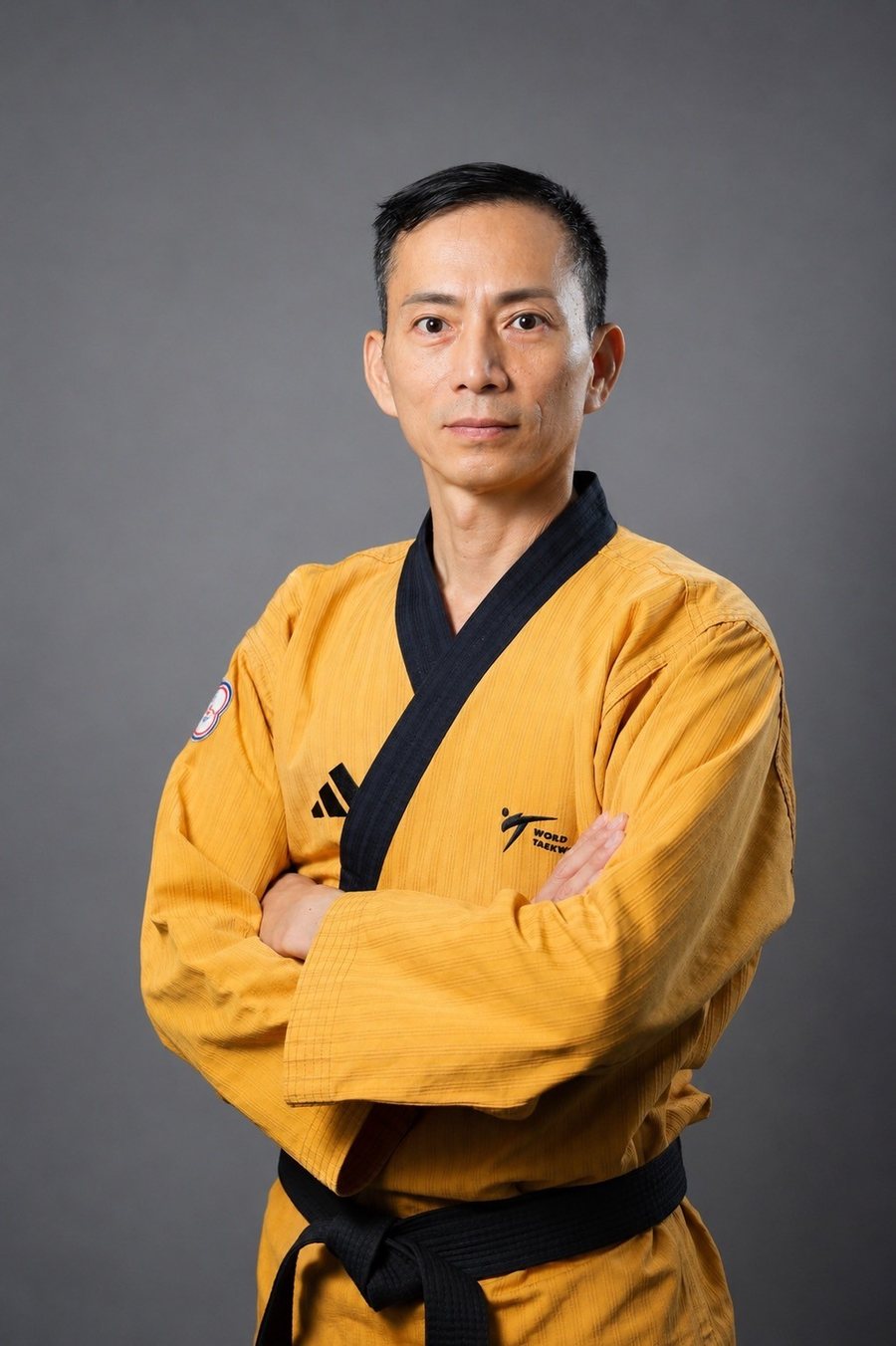
Chang Kuei-ling
Assistant Professor · Physical Education Office
Accept that the world around you shifts; keep your resilience for living.Read reflection
Building healthy habits and a team spirit
Led by teachers from the Physical Education Office, these mentors cultivate regular exercise and a spirit of teamwork, weaving sport into everyday life so that students can plan for a lifetime of activity, and encouraging them to volunteer and to develop the knowledge of a trained sports volunteer.
Physical education concerns both bodily and mental wellbeing. Physical education mentors cultivate regular exercise and a spirit of teamwork, weaving sport into everyday life so that students can plan for a lifetime of activity. NCU has performed strongly in recent competition, taking second place in the women's general division of the University Volleyball League, fifth in Division II of the women's open basketball league, fifth in the women's general division badminton team event at the National Intercollegiate Athletic Games, and sixth in the men's general division swimming team event.
2 mentors

Assistant Professor · Physical Education Office
Accept that the world around you shifts; keep your resilience for living.Read reflection

Lecturer · Physical Education Office
Practise a form a hundred times and the body finds its way; practise it a thousand and the reasoning shows itself. Learning sport is like living a life — the road to excellence is woven from sweat and tears.Read reflection
Our teacher really puts himself into it — even in blazing heat he came down and ran with us, always reminding us to watch out for tree roots and slippery ground. I already knew there was a lot to learn in this sport, and the stories he shared stayed with me; that he has represented Taiwan in competition amazed me. He teaches very well, and I would take his class again given the chance. He is serious and patient, always encouraging us and correcting our form.
Through my time on the dance team our teacher has been a constant presence. Beyond teaching technique, she has stood with us through every practice and every competition. There are inevitably times in rehearsal when things do not go well — when everyone is off form, or we keep falling short of what she is looking for, and the mood drops. But she never simply scolds us. She patiently shows us where the problem lies, then works through it with us.
Somewhere along the way I realised that what dance gives me is not only the thrill of being on stage. From one rehearsal after another to finishing a competition together, I learned how to talk to my teammates, and learned that even when I am exhausted I should still be thinking of the team. Thank you for staying with us and trusting us — you taught me more than how to dance; over that time I slowly became someone more responsible, more willing to give to the people around me.
When I heard the university had a modern dance team, I had no background in dance at all, so I only meant to sit in on rehearsals and follow along as best I could. Being taken onto the team was not something I expected, and I count it a piece of real luck.
I went from simply following the movements to trying to understand them — thinking about where the power comes from in the body, holding certain abstract images of motion in mind — and that understanding is what let me feel my own progress on solid ground. It comes from the many different ways our teacher finds to make a movement make sense: guiding us to imagine extension through space, explaining how the source of a movement connects to its extremities, showing how breath ties into the rhythm of the music. In this kind of teaching and this kind of environment, you learn far more than dance.
Joining the dance team gave me more than somewhere to dance; it gave me a group of people working towards the same thing. Modern dance is not a matter of getting through the movements — you have to think about what each one is meant to say, and over the course of rehearsing I slowly learned to speak with my body.
Preparing for competition is genuinely tiring, but going from those first rehearsals all the way to standing on stage together leaves you with a feeling of: we actually did this. What the team means most to me is that it lets me keep doing something I love while I am at university.
Professor Chang is a wonderfully skilled and kind teacher. In the conditioning class before each rehearsal she designs movements around the parts of the body we understand least, so that during training we have related movements to refer back to. Her suggestions are genuinely useful; whenever there is a movement I cannot follow I can ask on the spot, and she will demonstrate it again and again, always attentive and patient, and always reminding us where to be careful not to get hurt. Over these few years of team training and competitions, tiring as it can be, the progress has been unmistakable — it is a place full of happiness and the sense of having achieved something.
In my time with the dance team I have felt keenly how much our teacher gives to her teaching and to the team. In training she takes account of how everyone's body is holding up before raising the difficulty, and folds the rhythm, movement and coordination she wants us to learn into the warm-up or short combinations, so that the choreography and rehearsal that follow go more smoothly.
I love the feeling of everyone rehearsing together and encouraging one another. Even when my timetable keeps me from a session, she adjusts the schedule so that everyone can keep up. She has made me feel that the team is not only somewhere to learn to dance, but a group in which we push past our own limits and grow together.
Professor Chang teaches modern dance and yoga with real system. She points out the fine demands of a movement — the breath, the force, the part of the body you need to feel in a particular position — step by step, so we can work through them one at a time rather than being overwhelmed from the start. Where an individual falls short she gives a patient reminder, explains further, and demonstrates herself.
When I first joined I worried about fitting in with the rest of the team, but everyone turned out to be friendly and welcoming. Beyond guiding our dancing, she takes a real interest in our daily lives. The whole team is like a large family, and I am very glad to be part of it.

Professor Chang is skilled at teaching movement by drawing it out of you, and she looks after her students' physical and mental state. The team is well run — there are rules, but nothing rigid, and the atmosphere in training puts you at ease. What you learn is not only steps and technique but a fundamental way of using the body and of exploring space; in the lighter periods of training you can feel yourself moving and letting go. Competition season is exhausting and takes a great deal of time and energy, but competing alongside the rest of the team is deeply satisfying, and finishing a piece is a joy. It is thoroughly worth it.
10 photos
Making the residence hall a second place to learn
Learn moreCompany and exploration, lighting the way to a career
Learn moreLearning social responsibility through service
Learn moreSupporting student self-governance and leadership
Learn more